
Joint EIT Health Germany-Switzerland & EIT Health Spain Symposium
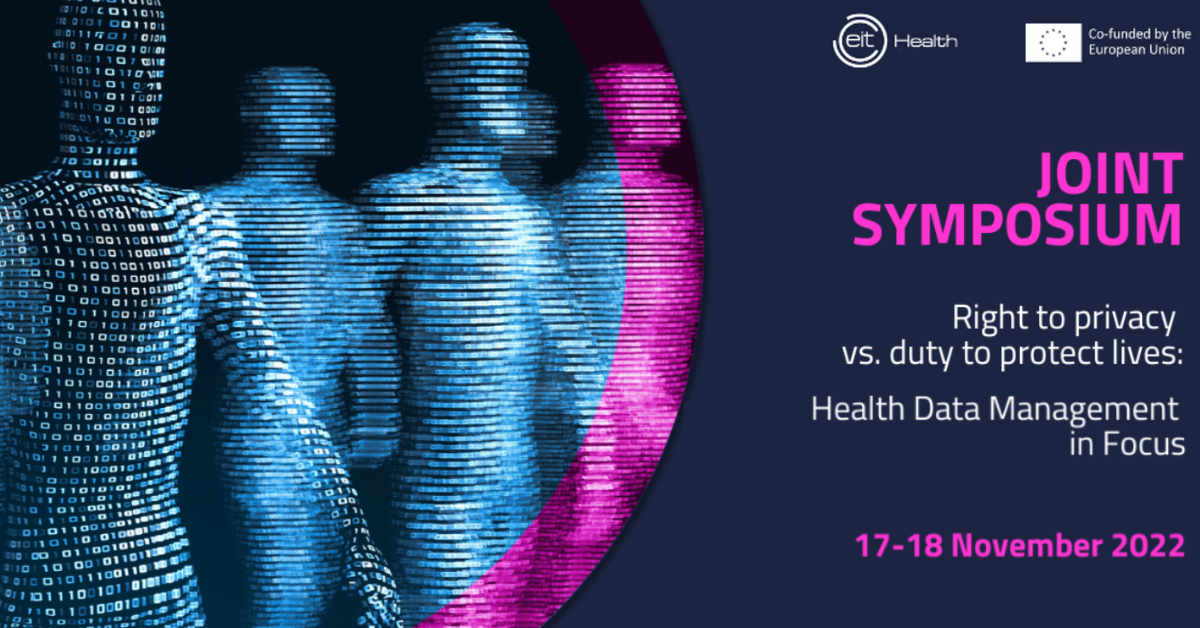

In our age, leaving digital footprints is inevitable. Whether we shop online, count our steps or pay with our credit card, we generate data that is subsequently available to various interested parties. How this data can or should be used is the subject of various public discussions. When it comes to increasing security or gaining economic benefits, the thought of being looked through and monitored by unknown entities makes many people feel uncomfortable. Therefore, the sovereignty over one’s own data was legally recognised with the EU-wide introduction of the GDPR in 2016, regulating the issue of ownership and accessibility of data.
When it comes to the use of data in healthcare, these points and many other ethical aspects need to be considered. The digitisation of medicine allows the generation of qualitative and numerical data that could be highly valuable in research and the development of innovative healthcare solutions, such as AI-based or personalised systems.
Data save lives – Looking at European Solutions
While governments and healthcare organizations must protect patients’ rights over their personal and health data, there are strong ethical arguments to be made to facilitate this data for patients’ benefit. Finding the right balance between these two duties is the aim of some public-private initiatives. EU institutions are evaluating the installing of pan-European data systems to ensure sustainability and resilience of the European health system, and to react to growing pressure by industrial and educational stakeholders.
In May 2022, the European Commission responded to this pressure by proposing the European Health Data Space, a “health-specific ecosystem comprised of rules, common standards and practices, infrastructures and a governance framework”. This proposal aims at increasing individuals’ “digital access to and control of their electronic personal health data, nationally and cross-borders” while also “providing a consistent, trustworthy and efficient set-up for the use of health data for research, innovation, policy-making and regulatory activities”. EIT Health reacted to this proposal by publishing a statement, endorsing the efforts. EIT Health endorsed this proposal in its statement published on 5 May 2022.
Another approach that stands in contrast to this centralisation-oriented proposal is the Gaia-X project, which aims to establish a system of rules that guarantee individual data owners to exchange data in a trusted environment and promote the creation of new shared data spaces to create a digital economy.
Mobilising the biggest European health network
These are questions that the EIT Health network regularly addresses when developing new solutions, introducing them into care systems and interacting with users. Contemporary products that use AI, personalised medicine, mobile services, and wearables must adhere to legal and ethical aspects in order to ensure trustworthiness. Since regulations vary on a national level, companies that develop data-driven healthcare products foster a close-knit network with institutions in several countries to match national requirements and sensitivities.
For the Joint EIT Health Germany-Switzerland & EIT Health Spain Symposium, we invite our partners, but also other interested stakeholders from both ecosystems, to explain and discuss these topics in the course of a two-day programme. Besides political considerations, representatives from industry and research will come to share their experiences and approaches in the field of data management.
Register via Eventbrite.
AGENDA (preliminary)
17 November 2022:
10:30-11:15 Welcome | Breakfast buffet
11:15-12:00 Introduction & Political Keynotes| Nandor Gaus (EIT Health RIH Germany-Switzerland), Izabel Alfany (EIT Health Spain), Nick Schneider (Bundesministerium für Gesundheit)
12:00-13:00 Podium Discussion | Creating European Data solutions: Ongoing approaches and projects. Discussants: Nick Schneider (Bundesministerium für Gesundheit) | Harald Wagener (Berlin Institute of Health, Charite) | Moderation: Dr. Lars Riedemann (Uni
13:00-14:00 Lunch Break
14:00-17:00 Health Data Management in Focus – Learnings from research and industry across Europe | Parallel sessions of oral presentations drawn from abstracts
ROOM 1: GDPR, Security and technical solutions: safe approaches to new data management
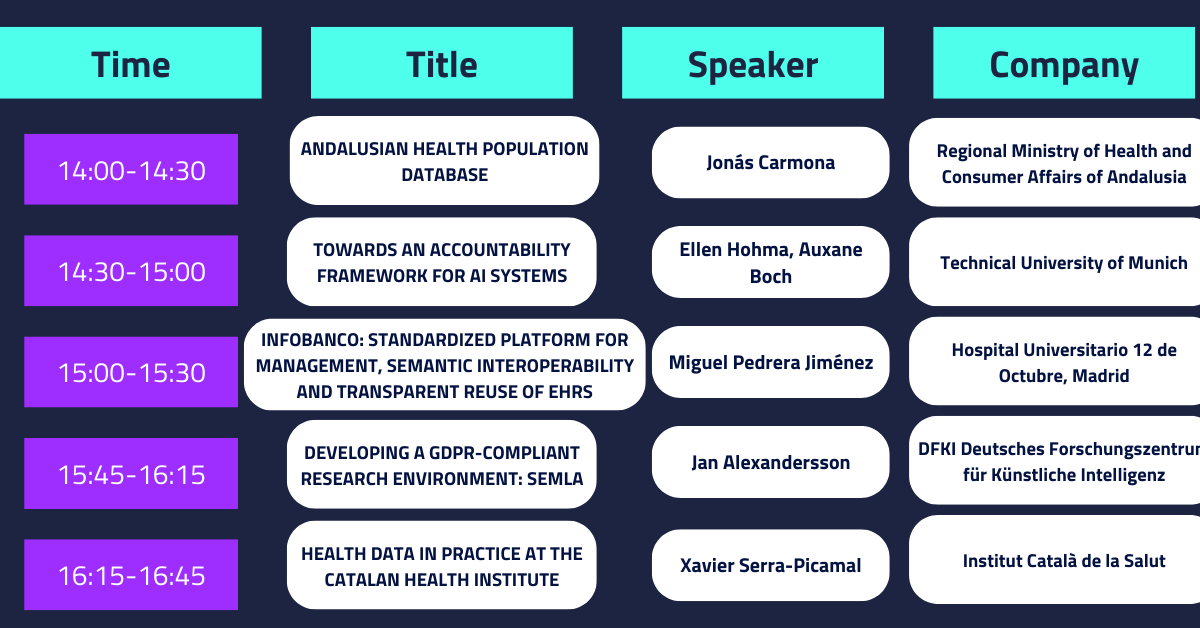
ROOM 2: Practical implementations and chances for healthcare providers and patients
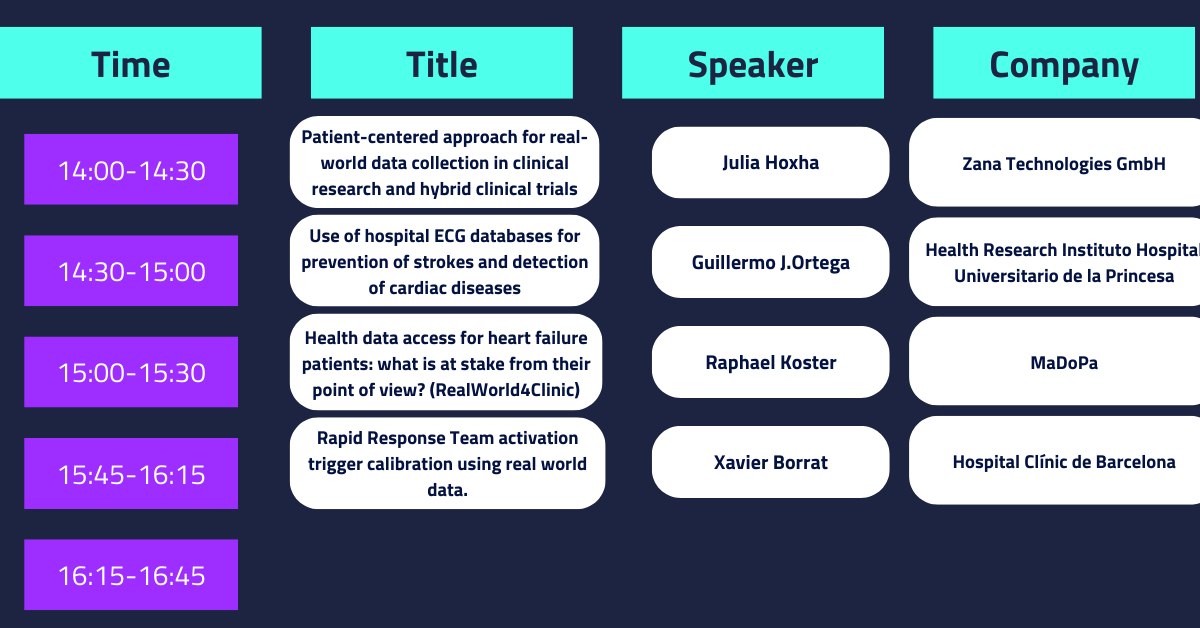
17:30-18:30 Innovation Market Place | Entrepreneurial Innovators
18:30-21:00 Get-together/Dinner
18 November 2022:
9:00-10:00 You Can’t Have AI Both Ways: Balancing Health Data Privacy and Access Fairly |Dr. Stuart McLennan, TUM
10:00-10:30 Coffee Break
10:30 – 12:30 Statement development Workshops (facilitated sessions)
12:30-13:00 Closing of Event & Next steps Nandor Gaus (EIT Health RIH Germany-Switzerland), Izabel Alfany (EIT Health Spain)
13:00-14:00 Lunch Break
14:00-16:00 Closed Session | German-Swiss Partner Meeting (German-Swiss Partners only)
Upcoming Events
High Value Care Seminar Series – How to improve project multi-site Learning communities.